
About Kanban Views
Kanban views visually map out process flows, where each column stands for a distinct stage and each card represents a record.Move Cards between Stages
You can move each card between stages as it goes through your workflow by clicking and holding a card, then dragging it to the next stage.Add and Delete Stages
You can tailor your workflow to suit your needs using stages, each of which represents a value in a Select field:Add Stages
To add a stage, access the Select field settings by navigating to Settings > Data Model, selecting your object, and then selecting the field your Kanban board depends on.Remove Stages
To remove a stage, hover over the stage name or the⋮ icon, click Edit from settings in the Select field settings, and then click Delete next to the relevant stage.
Display Fields
You can configure your Kanban board to display some fields and hide others. To show or hide a field, click on Options on the top right, then on Fields to bring up the list of options, and click the eye icon next to the field to show or hide it. You can also rearrange the order of fields by holding down the field name and dragging it to where you want it.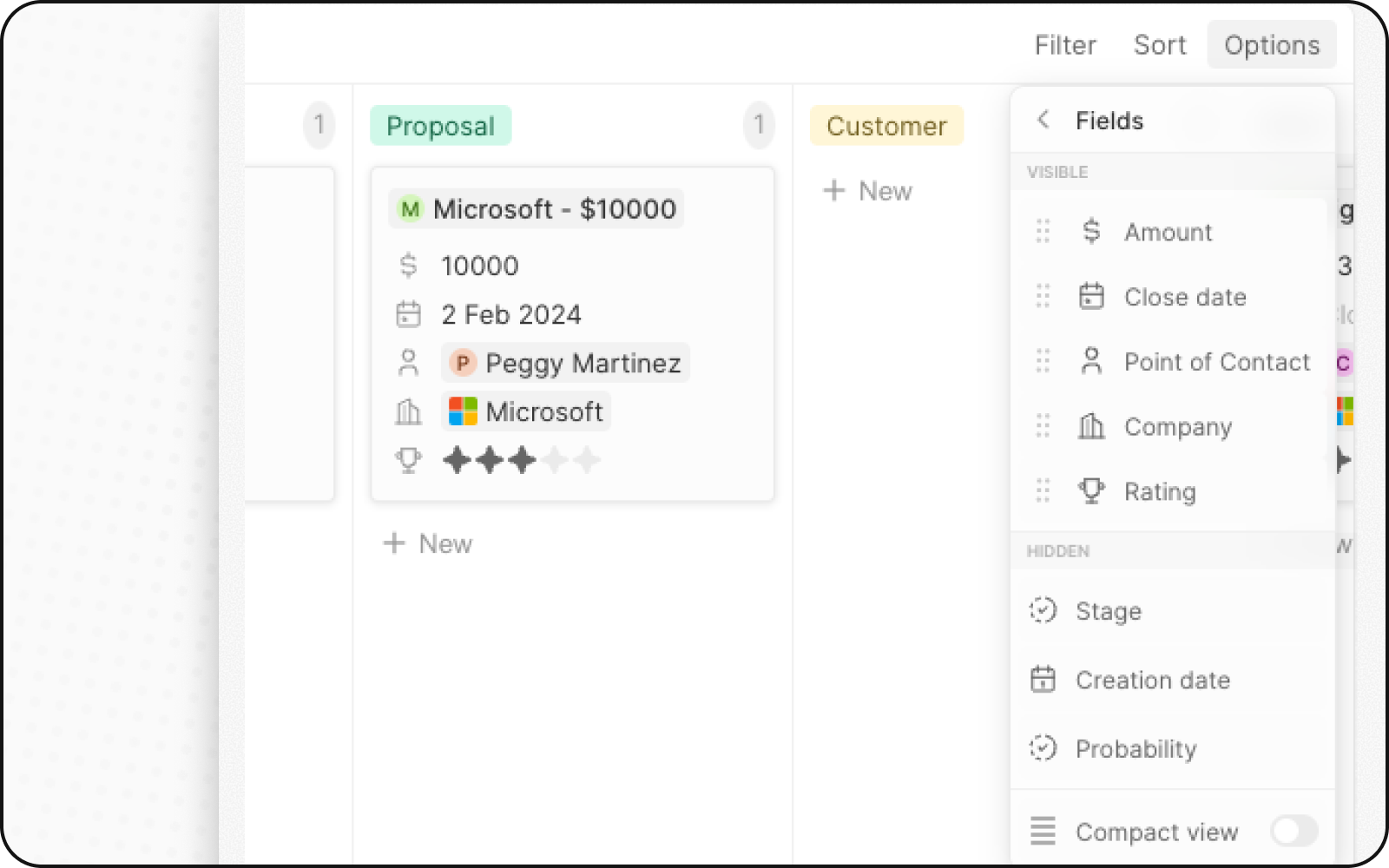
Compact view
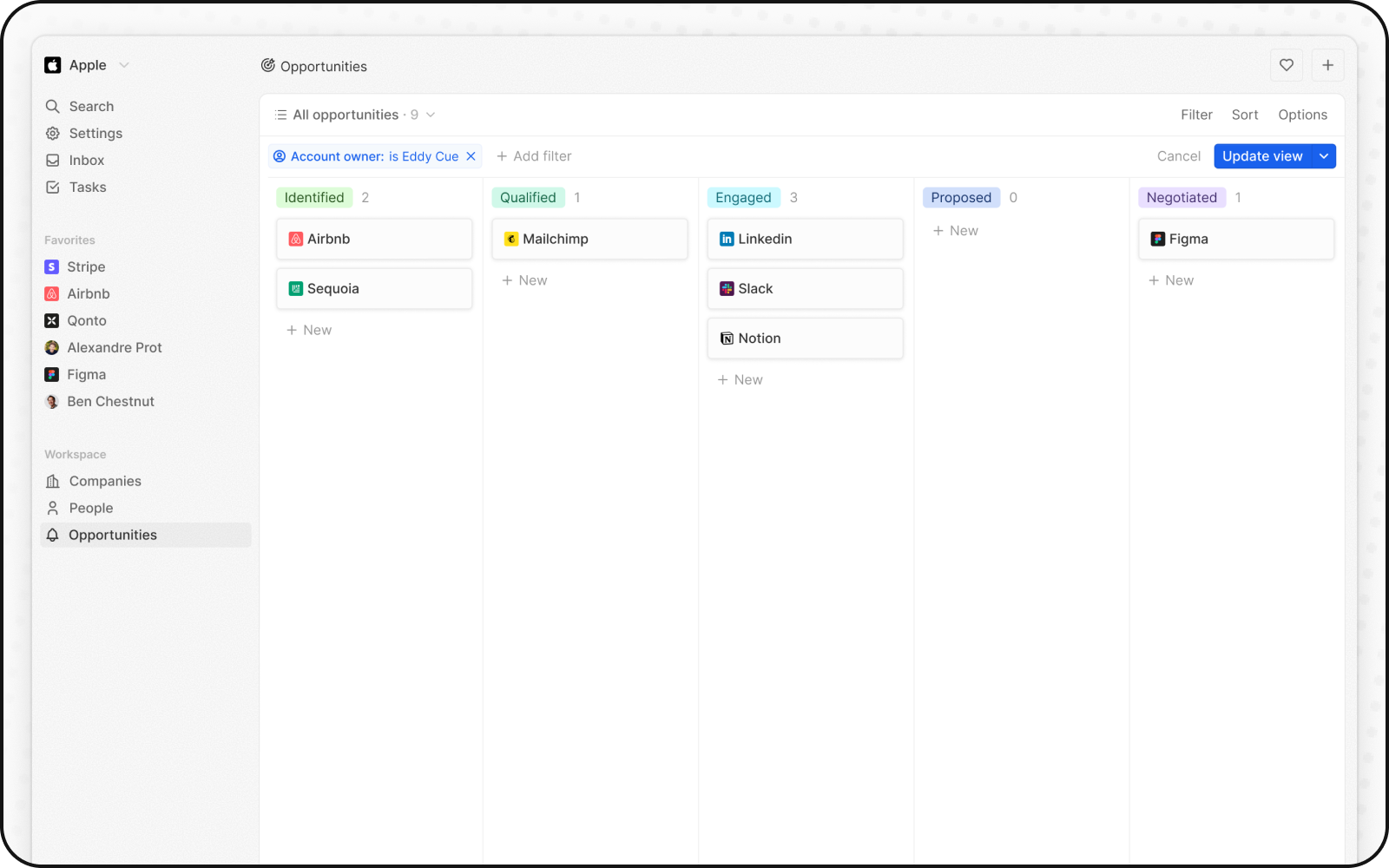
You can hide all the fields and get an overview of all records at a glance. To enable:- Click Options on the top right
- Turn on the toggle for Compact view
Column Aggregations
Each column in a Kanban view can display aggregated values at the top, helping you understand your data at a glance.Available Aggregations
Configuring Aggregations
- Click on the number displayed next to the Stage value, at the top of a column
- Select the aggregation type
- Choose the field to aggregate
When to Use Kanban Views
Kanban views are ideal for:- Sales pipelines: Track deals through stages from lead to close
- Project management: Monitor tasks through workflow states
- Recruitment: Track candidates through hiring stages
- Any staged process: Visualize any workflow with defined stages
Best Practices
Organize Your Stages
- Limit stages: 5-7 stages is ideal for visibility
- Clear naming: Use descriptive stage names
- Logical order: Arrange stages in process order
Optimize Card Display
- Show key fields: Display only the most important information
- Use Compact view: For high-level overviews
- Color coding: Use stage colors to quickly identify status
Maintain Data Quality
- Update regularly: Keep cards moving through stages
- Archive completed: Move closed items out of active view
- Review stale cards: Follow up on cards stuck in stages